7 MP Mentions in Parliament: Vegetarian Society’s Ban Hatch & Dispatch Campaign Leading the Animal Welfare Debate.
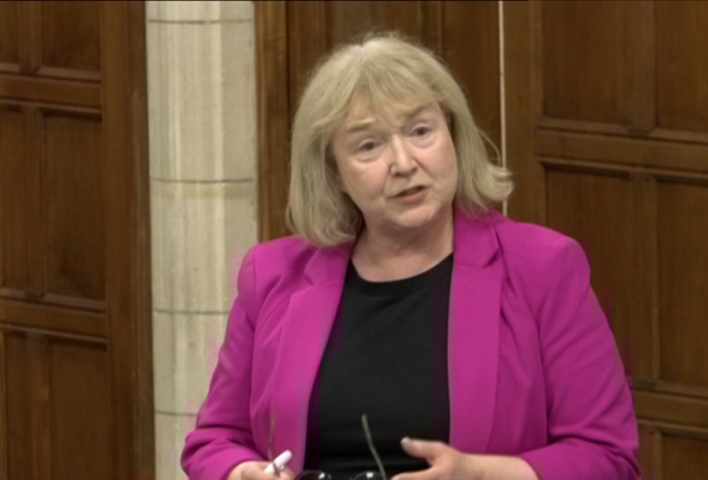
With the publication of the Government’s Animal Welfare Strategy, there has been an accompanying debate in Parliament. While other topics were of course covered, we were particularly pleased to see regular mention of in-Ovo sexing and a potential ban on culling male chicks.
The Strategy made it clear that the Government supports an end to male chick culling, although it puts the onus on the industry to lead on taking action. A total of six MPs made reference to the issue in the debate, largely welcoming the Strategy while emphasising the need for swift action.
The debate was led by Samantha Niblett MP (South Derbyshire), and included contributions from a range of MPs across Labour, the Liberal Democrats, Conservatives, the Green Party, and the DUP. Other issues covered included: caging and crating hens and sows, snaring wild animals, puppy farms and dangerous breeding practices.
Samantha Niblett (South Derbyshire, Labour)
Each year approximately 40 to 45 million male chicks from conventional laying hen breeds are culled within 12 to 36 hours of hatching. It is encouraging then, that the UK egg industry is exploring technology to sex eggs before chicks are born, with the aim of eliminating the need for this practise.
Irene Campbell (North Ayrshire and Arran, Labour)
That assessment has been done and it’s going to be it would be approximately 1p on per egg in cost to introduce In-ovo sexing in eggs in this country. I visited the Netherlands on Monday to actually visit one of these facilities and he said in the Netherlands it cost approximately one cent on an egg.
Navendu Mishra (Stockport, Labour)
The Vegetarian Society launched a campaign last year called Ban Hatch and Dispatch. Approximately 45 million male chicks are culled each year, primarily through gassing. So, can I please press the government to ban male chick culling and support the smooth implementation of mandating in over sexing in British hatcheries?
Kerry McCarthy (Bristol East, Labour)
I think it’s 40 to 45 million male chicks that are slaughtered each year within a day of birth, but I don’t think we can allow those discussions. There’s all systemic issues in terms of how much farmers are paid for their food, how much we’re prepared to pay for our food.
And I don’t think we should be using the financial argument in terms of pressure on farmers to move away from doing what is right in terms of ethical animal welfare practises, one of the things I wanted to flag quickly, I mean, I look at things very much about trying to avoid that shift towards ever more intensive industrialised farming. We know, for example, the poultry industry in this sector is huge, over a billion meat chickens bred every year. We know the impact that has on our water supplies, on air pollution, and we know, again, that farmers make very well. They’re more like factories, really, than farms, but there’s very little profit to be made from that.
Laura Kyrke-Smith (Aylesbury, Labour)
I really welcome the fact that the animal Welfare strategy commits to phasing out cages for laying hens alongside farrowing crates for pigs. And I think these will be really fantastic steps. I hope the Minister will work at pace, in consultation with all relevant stakeholders to drive those forward. And I would love to see an end to male chick hatching too. The technology is there, we just have to adopt it.
Irene Campbell Visits a Hatchery
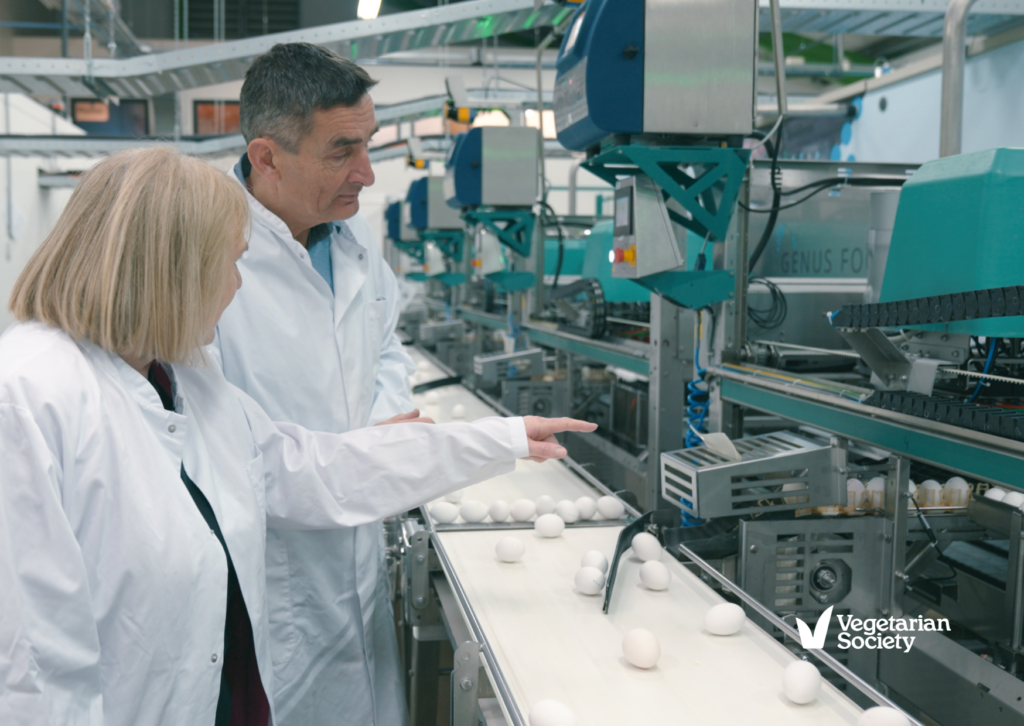
Irene Campbell MP, friend of the Vegetarian Society and supporter of our Ban Hatch and Dispatch campaign, recently visited a chick hatchery in the Netherlands. There, she was taken on a tour of the advanced facility. In the Netherlands, in-ovo sexing is commonplace, and the technology is regularly used. On her tour, Mrs Campbell MP saw how simple and effective the practice is – commenting:
‘In the UK at the moment, we are currently killing around 45 million chicks every year. There is no justification for this cruel and outdated process to continue. By using this technology, it actually means that the eggs are discarded and the chicks don’t have to be hatched and killed.
It would be a huge step forward for animal welfare in the UK if we adopted this technology, and I don’t see that we can argue that we can’t adopt this as soon as possible. It’s working very well in the Netherlands and other countries, and there is no reason why the UK can’t adopt it sooner rather than later.
I believe we really must implement this system in the UK. I don’t think we’ve any excuses not to. It’s better for the egg industry, it’s better for the consumer and it’s obviously better for the male chicks.’
Read more about our Ban Hatch & Dispatch Campaign here
You can also read our official response to the Animal Welfare Strategy here
Lettuce Keep You in the Loop

We are a collective of determined people, connected by our shared belief in a better future for every life on earth. Keep up with our work and sign up to our newsletters...
Follow us on social