Why veggie labelling matters, and why the UK must speak up now
Jenny Canham, Public Affairs Lead
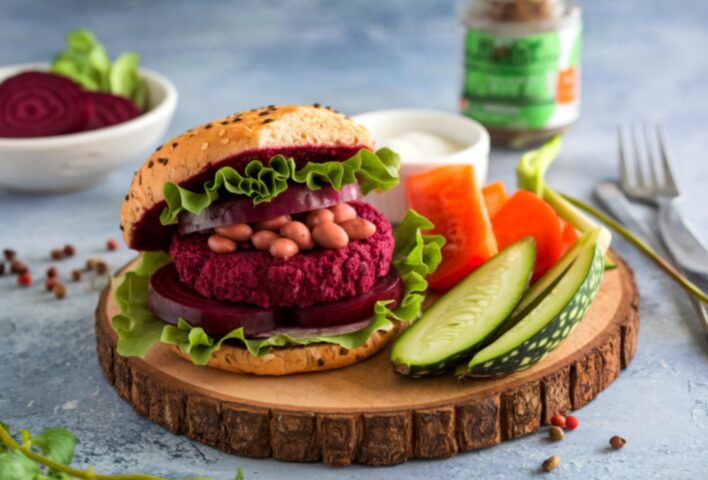
The way veggie foods are labelled might sound like a technical detail, but it has far-reaching consequences for consumers, businesses, and the future of sustainable food. Recent developments at EU level have brought this issue back into sharp focus, with renewed discussions about restricting the use of familiar terms such as ‘burger’ and ‘sausage’ for veggie products.
How EU decisions could impact the UK
You may have seen recent headlines about discussions in the EU around a potential ban on familiar veggie terminology. So why should this matter to us in the UK?
Although the UK is no longer a member of the European Union, decisions taken by the European Commission still matter deeply. Our food markets remain closely connected, UK businesses continue to trade into the EU, and EU regulatory decisions often shape global norms that ripple far beyond Europe’s borders.
That’s why, working alongside Meat Free Monday, we coordinated an open letter signed by cross-party UK MPs urging the European Commission not to ban familiar terms that have been used to label veggie foods for decades. With the support of Sir Paul McCartney and the McCartney family, this intervention achieved significant international media coverage, including in Politico, a publication widely read by EU Commissioners and policymakers.
Why speaking out in support of veggie terminology matters
At the heart of this debate is consumer clarity. Supporters of a ban argue that using familiar meat-related terms confuses shoppers. However, the evidence consistently shows the opposite.
Existing food law already provides strong protections against misleading labelling, and courts have confirmed that current legislation is sufficient to protect consumers. In reality, people choosing veggie burgers or sausages do so intentionally and understand exactly what they are buying.
Research repeatedly shows that consumers recognise veggie alternatives and actively support the use of clear, familiar terminology. Removing these terms risks increasing confusion rather than reducing it, forcing producers to rely on vague or unfamiliar language that makes products harder, not easier, to understand.
There are also significant economic implications. The plant-based sector is one of the fastest-growing areas of food innovation, supporting jobs, investment, and new opportunities for farmers. Restricting terminology would impose unnecessary costs on businesses, require packaging redesigns, and fragment markets across borders. For UK producers exporting to the EU, this could mean additional barriers at a time when trade should be becoming simpler, not more complex.
Beyond economics, veggie foods play a vital role in tackling climate change, nature loss, and food insecurity. Expanding access to plant-based options supports lower-emission diets, reduces pressure on land, and helps diversify farming systems. Policies that make it harder for consumers to identify and choose these products run counter to shared environmental and public-health goals.
This is why it is so important for UK voices to be heard. UK MPs have already made clear to the European Commission that banning familiar veggie terms would be a step backwards -not just for Europe, but globally.
What’s the latest on the proposed EU ban?
Just days after our open letter was sent to the European Commission, further discussions took place. However, the Commission failed to reach agreement, and talks have now been postponed until early 2026.
This additional time is critical. We must use it to show the European Commission, and the wider world, that empowering people to make ethical and sustainable food choices is more important than ever. Clear labelling builds consumer confidence. Unnecessary terminology bans risk undermining it, with potentially damaging consequences for the planet, animals, and public health.
How you can help
Clear labelling, not terminology bans, helps people make informed, ethical, and sustainable choices. Now is the time to act. You can help by:
· Signing the collective petition (open to everyone, not just EU citizens) calling on the EU not to ban familiar veggie terminology
· Writing to your MP to ask them to defend veggie terminology and raise awareness of the global impact this decision could have
Together, we can protect veggie terminology and empower more people to choose ethical and sustainable food.
Lettuce Keep You in the Loop

We are a collective of determined people, connected by our shared belief in a better future for every life on earth. Keep up with our work and sign up to our newsletters...
Follow us on social