Open Letter to the European Commission
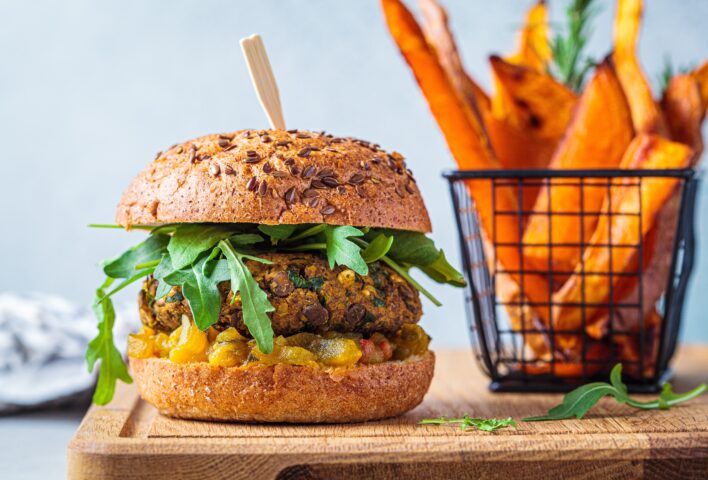
Letter to the European Commission, the European Parliament and the Council of the European Union
From Businesses Operating Across Global Markets
February 2026
Dear representatives of the European Commission, the European Parliament and the Council of the European Union,
We are writing as food businesses operating across global markets, including the European Union, the United Kingdom and the United States, to share our perspective on the ongoing discussions concerning the possible restriction of commonly used food terms such as ‘burger’ and ‘sausage’ for plant-based products.
This letter is intended as a practical follow-up to earlier interventions on this issue, including action taken last year by Members of the UK Parliament, supported by Paul McCartney and the McCartney family. As deliberations at Commission level continue, we believe it is important that the implications for food businesses operating across borders and supply chains are clearly understood.
Our concerns relate to how food markets function in practice, how consumers navigate choices, and how regulatory signals from the EU shape global norms.
A question of regulatory coherence, not semantics
For businesses operating internationally, food terminology is not simply a matter of language. It underpins regulatory certainty, cross-border trade, packaging systems, trademarks, and consumer recognition. The use of terms such as ‘plant-based burger’ or ‘vegetarian sausage’ has developed organically over decades as a way of communicating format and use, not composition.
Imposing restrictions on these terms would introduce divergence between the EU and other major markets, including the UK and US, creating friction where alignment currently exists. For companies supplying multiple jurisdictions, this would mean parallel labelling systems, increased compliance costs, and reduced efficiency without a corresponding consumer benefit.
How consumers use food labels
From our direct engagement with consumers, these terms function as navigational tools. They help shoppers quickly understand how food products fit into a meal, how they are cooked, and how they replace or complement familiar foods.
Removing this shared vocabulary would not clarify choices; it would require consumers to learn a new, artificial lexicon that varies by jurisdiction. As the Advocate-General has already observed, such an approach risks increasing confusion rather than reducing it.
Clear ingredient lists and qualifiers such as ‘plant-based’ or ‘vegetarian’ already provide the information consumers need and are consistently applied by responsible businesses.
Investment, innovation, and smaller operators
The plant-based category has attracted significant investment in product development, manufacturing, and European agricultural supply chains. Much of this innovation comes from small and medium-sized enterprises, for whom regulatory predictability is essential.
A sudden change in permitted terminology would impose disproportionate burdens on these operators, forcing rebranding, redesign, and legal review across multiple markets. At a time when the EU is seeking to boost competitiveness, simplify regulation, and support innovation, this would send a confusing and contradictory signal.
The EU’s role in setting global food norms
EU food law has long played an outsized role in shaping global standards. Decisions taken now will influence not only European markets, but also international trade discussions, regulatory alignment, and future innovation pathways.
Maintaining a proportionate, evidence-based approach, focused on transparency rather than prohibition, helps preserve the EU’s reputation as a stable, dependable, and forward-looking regulatory environment.
Our request
As businesses directly affected by the outcome of these discussions, we respectfully urge the European Commission, the European Parliament and the Council of the European Union to:
- Maintain the current regulatory approach, which already ensures consumer protection and clarity
- Avoid introducing terminology restrictions that create market fragmentation without demonstrable benefit
- Continue to prioritise alignment with global trading partners
We would welcome the opportunity to engage constructively with you as discussions continue.
Yours sincerely,
Linda McCartney Foods
Cauldron
Quorn

The Vegetarian Butcher Collective
ViveraR
THISTM
Suma Wholefoods
Meatless Farm
Beyond Meat
The Live Kindly Co
SunVit D3 Limited

ADAllen Pharma

Quinola
Redefine Meat EMEA BV
Tyne Chease
Phat Pasty
Conscious Skincare
Lanesters
Holly Molly
The Tofoo Co.
Also supported by:
The Vegetarian Society
Meat Free Monday
European Vegetarian Union
European Alliance for Plant-based Foods
Plant Futures
The Food Foundation
Coller Foundation
Alternative Proteins Association
Plant-based Food Alliance UK
Sustain

Notes to editors
For more information on this story please contact press@vegsoc.org or call 07595 722561
About the Vegetarian Society
The Vegetarian Society is a campaigning charity formed in 1847. Together we are working towards a better life for all. A better life for animals, for people and for the planet. We know small changes by many can make a huge difference. We work with communities, businesses and policymakers to drive real change. From recipes and cookery classes to political campaigning, we produce good food to fuel the good fight.
As the UK’s leading authority on vegetarianism, we are dedicated to providing trusted guidance, accreditation, and advocacy for vegetarian and plant-based living. Our Vegetarian Society Approved trademarks are globally recognised standards for vegetarian, vegan and plant-based food certification, ensuring transparency and confidence for consumers. The certifications are symbols you will see on thousands of products in shops all over the UK, EU, USA and many other countries. The Plant-Based Trademark is the newest trademark from the Vegetarian Society.
Find out more at www.vegsoc.org
Lettuce Keep You in the Loop

We are a collective of determined people, connected by our shared belief in a better future for every life on earth. Keep up with our work and sign up to our newsletters...
Follow us on social