EU bans dozens of familiar food names
PRESS RELEASE
6 March 2026
EU bans dozens of familiar food names – brands and consumers urged to push back
The Vegetarian Society has warned that new European Union rules restricting the use of animal-related food terms could have far-reaching consequences for the UK food industry and consumers. The restrictions, agreed in trilogue negotiations on 5 March, may directly affect UK products exported to EU markets and could influence future domestic standards, potentially reshaping how familiar foods, from soups and noodles to ready meals and snacks, are labelled.
With EU governments backing the decision, the Vegetarian Society and allied industry and civil society organisations say urgent public and industry pressure from the UK is needed to prevent unintended consequences for British businesses and consumers.
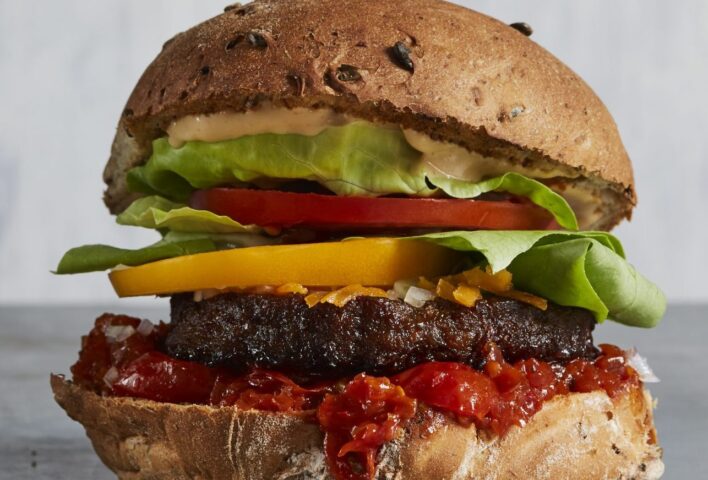
The rules will prohibit 31 animal-associated names and cuts for plant-based foods, including ‘beef’, ‘pork’, ‘chicken’, ‘breast’, ‘thigh’ and ‘bacon’. Highly debated terms like ‘burger’, ‘sausage’ and ‘nuggets’ remain permitted for plant-based foods, provided they are clearly labelled.
Why this matters for the UK
Many UK products marketed with flavour descriptors such as ‘chicken’ or ‘beef’ contain only small amounts of those ingredients. The EU’s restrictions could affect labelling requirements for these products when exported to EU markets, creating additional costs, redesigns, and regulatory burdens for UK manufacturers. Experts warn that these rules could also set a precedent influencing UK food labelling standards in the future.
Jenny Canham, Public Affairs Lead at the Vegetarian Society, said:
“These decisions risk creating confusion and unnecessary barriers for both UK consumers and businesses. Everyday products that use flavour descriptors like ‘chicken’ or ‘beef’ could be indirectly affected, especially those exported to the EU.
It’s critical that public and industry voices are heard now. We also call for a full EU-wide impact assessment, to ensure the consequences for consumers, businesses, and trade are fully understood.”
Broad opposition
High-profile support for opposing the EU rules comes from Sir Paul McCartney and the McCartney family, who have repeatedly defended plant-based terminology. In December 2025, Sir Paul McCartney, patron of the Vegetarian Society, added his support to a group of cross-party UK MPs challenging the restrictions, highlighting the potential negative impact on global markets. He said:
“To stipulate that burgers and sausages are ‘plant-based’, ‘vegetarian’ or ‘vegan’ should be enough for sensible people to understand what they are eating. This also encourages attitudes which are essential to our health and that of the planet.”
The Vegetarian Society is also joined by over 20 businesses, including Linda McCartney Foods, Cauldron, Quorn Foods, and THIS™, as well as civil society organisations, in calling for reconsideration of the rules. They warn that the restrictions could increase costs for manufacturers, limit consumer choice, and influence food labelling standards worldwide.
Evidence shows consumers are not confused
Research consistently shows that EU consumers understand plant-based food labels and are not confused by familiar terms like ‘veggie burger’ or ‘vegetarian sausage’. Studies from Germany, Portugal, Spain, and Greece indicate that 80–95% of consumers correctly identify plant-based alternatives.
A recent YouGov survey shows that over 90% of UK respondents (92%) have never bought, or cannot recall buying, a plant-based sausage or burger thinking it contained meat.
Empirical evidence, reinforced by EU court rulings and expert opinions, demonstrates that current legislation already protects consumers, and banning well-established terminology could actually increase confusion.
Economic and market impact
The changes could have significant implications for UK manufacturers, particularly small and medium-sized enterprises (SMEs), which may face packaging redesign, parallel labelling requirements, and additional compliance costs for exporting products to the EU. The EU’s regulatory framework often influences global standards, meaning these decisions may also affect international trade and labelling norms beyond Europe.
Analyses suggest that regulatory hurdles affecting the plant-based sector, including naming restrictions, could reduce projected market growth and investment across Europe in the coming decades.
Next steps
Jenny Canham added:
“We must remember what restricting food terminology truly means: creating barriers for people choosing foods that are better for the planet, for animals, and for our own health.
We urge the UK public and brands to speak up now, demand a reconsideration of these rules, and call on the EU to carry out a full, robust impact assessment to fully understand the consequences for UK businesses, consumers, and trade.”
The Vegetarian Society will continue engaging with partners and monitoring developments as further technical details emerge in the coming weeks.
ENDS
Notes for Editors
- For all press enquiries, please contact press@vegsoc.org
- The trilogue negotiations involved representatives from the European Parliament, the Council of the European Union and the European Commission
- Further clarification on composite products, flavourings and related terminology is expected at a later stage
- Previous interventions on this issue have included letters from (1) Sir Paul McCartney, the McCartney family and UK Members of Parliament and (2) global brands and food businesses
- Evidence cited includes findings from BEUC, Smart Protein, national studies from Germany, Spain, Portugal and Greece, as well as recent ECJ and Advocate-General opinions
- YouGov survey: 92% figure is from YouGov Plc. Total sample size was 2146 adults. Fieldwork was undertaken between 3rd – 4th December 2025. The survey was carried out online. The figures have been weighted and are representative of all UK adults (aged 18+).
About the Vegetarian Society
The Vegetarian Society is a charity formed in 1847. Together we are working towards a better life for all. A better life for animals, for people and for the planet. We know small changes by many can make a huge difference. We work with communities, businesses, and policy-makers to drive real change. From recipes and cookery classes to political campaigning, we produce good food to fuel the good fight. Find out more at vegsoc.org.

Lettuce Keep You in the Loop

We are a collective of determined people, connected by our shared belief in a better future for every life on earth. Keep up with our work and sign up to our newsletters...
Follow us on social