Open Letter: Call for an End to Routine Tail Docking and Castration of Lambs
Department for Environment, Food & Rural Affairs
Seacole Building, 2 Marsham Street
London SW1P 4DF
Date: 29/08/26
Dear Secretary of State,
Re: End the routine tail docking and castration of lambs
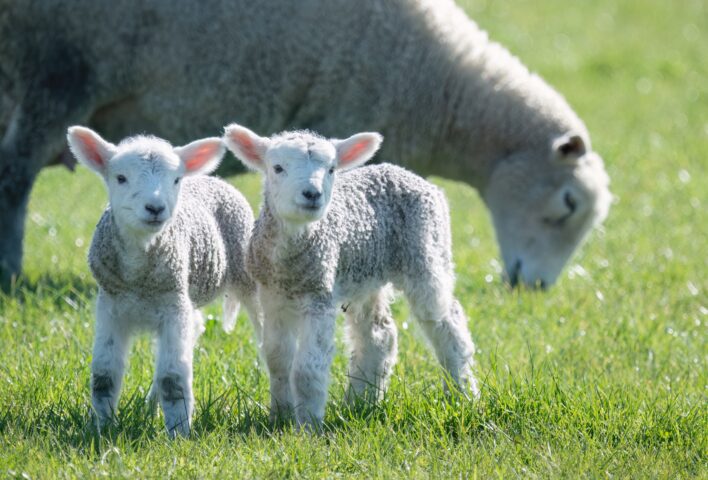
We write to urge the Government to introduce an urgent end to the routine tail docking and castration of lambs.
We welcome Defra’s recent public consultation on this issue and its commitment in the 2025 Animal Welfare Strategy to ‘work with the sheep sector to implement the advice and recommendations in the Animal Welfare Committee’s (AWC) ‘Opinion on the Implications of Castration and Tail Docking for the Welfare of Lambs’ (2024) and update the Sheep Welfare Code.’1 We urge the Government to press ahead with this commitment and to significantly reduce the number of lambs subjected to these painful practices.
Scientific Evidence of Harm
A substantial body of evidence demonstrates that both castration and tail docking cause significant acute pain, tissue damage, and prolonged physiological and behavioural stress responses in lambs. These procedures induce pain through tissue injury, ischaemia (restriction of blood supply to tissues), and inflammation, with some methods, such as rubber rings, causing prolonged pain associated with tissue necrosis and delayed healing.2
In response to these procedures, lambs exhibit clear behavioural signs of pain, including abnormal body postures, foot stamping, reduced normal activity, and changes in suckling and social behaviours.3 Research also indicates that newborn lambs may be equally or even more sensitive to painful stimuli than older animals.4
While pain relief can reduce some acute responses, it does not prevent the underlying tissue damage, inflammation, necrosis, and extended healing processes inherent to these procedures.5 Moreover, pain relief is often inconsistently applied and may be insufficient to fully mitigate the pain these procedures cause. As the British Veterinary Association has noted, pain mitigation does not render routine mutilation pain-free.6
Animal Welfare Committee Recommendations
Castration and tail docking of lambs are currently routine husbandry practices, allowed under the Mutilations (Permitted Procedures) (England) Regulations 2007 for animal management convenience, market requirements, or production system constraints. The AWC argues that these justifications are not sufficient to warrant the infliction of significant and avoidable suffering on sentient animals.7
In its Opinion on the Implications of Castration and Tail Docking for the Welfare of Lambs, the Committee recommends that legislation across all UK administrations be urgently updated to reflect current scientific evidence, with revised provisions in place by 2028 at the latest.
Crucially, the AWC proposes that both castration and tail docking should be strictly limited to specific circumstances, subject to veterinary oversight, and only permitted where there is a clear and evidence-based welfare justification and no viable alternative.
These recommendations are consistent with earlier advice from the Farm Animal Welfare Committee, which stated that castration and tail docking should only be undertaken after a formal welfare risk assessment with a veterinary surgeon as part of a farm health and welfare plan, and that the Government should introduce systems to monitor their use and demonstrate welfare improvements.8 The AWC further recommends that anaesthesia and analgesia be routinely required whenever significant pain is likely, that improved and licensed pain relief methods be developed, and that reliance on routine husbandry mutilations be reduced through improved management systems.
Recommended Government Action
With regard to the scientific evidence, the proven detrimental effects on lamb welfare, and the AWC recommendations, we urge the Government to:
- Prohibit routine tail docking and castration of lambs, including rubber ring, clamp, clip, combined, and hot iron methods;
- Allow only narrow veterinary exceptions where clinically necessary for the treatment of an individual animal, with mandatory effective pain relief;
- Introduce strong oversight and enforcement, including regular inspections and reporting of all animals subjected to these procedures, with clear veterinary justification required in each case;
- Bring amended legislation into force by 2028 at the latest, in line with the Animal Welfare Committee’s recommendation, and publish a clear implementation timetable this year;
- Require all imported food to meet UK animal welfare standards;
- Support a transition away from animal husbandry systems that rely on painful mutilations as standard and incentivise greater farming diversification particularly focused on boosting our arable and horticultural sectors, enabling greater UK food security and a shift towards fibre-rich diets in support of better public health.
Yours sincerely,
- Baroness Bennett of Manor Castle
- Sîan Berry MP
- Richard Burgon MP
- Ian Byrne MP
- Irene Campbell MP
- Baroness Cass
- Carla Denyer MP
- Neil Duncan-Jordan MP
- Alex Easton MP
- Cat Eccles MP
- Andrew George MP
- Baroness Hodgson of Abinger
- Baroness Jones of Moulsecoomb
- Rachael Maskell MP
- Alex Mayer MP
- Kerry McCarthy MP
- John McDonnell MP
- Iqbal Mohamed MP
- Toby Perkins MP
- Adrian Ramsay MP
- Baroness Redfern
- Bell Ribeiro-Addy MP
- Hannah Spencer MP
- Baroness Young of Hornsey
Also supported by:
Mary McCartney




1 Department for Environment, Food and Rural Affairs (2025) Animal Welfare Strategy for England
2 Kent, J.E., Molony, V. and Graham, M.J. (1993). Comparison of methods for the castration of lambs. Veterinary Record, 133(3), pp. 68–70.
3 Maslowska 2020; Guesgen 2016; Lester 1996; Grant 2004; Marchewka 2016.
4 Guesgen et al. (2011); Kent et al. (1993); Johnson et al. (2009).
5 Melches et al. (2007); Harris et al. (2021); Woods and Adcock (2025).
6 British Veterinary Association (2020) Sheep castration tail–docking and pain management
7 Animal Welfare Committee (2022) Opinion on the Implications of Castration and Tail Docking for the Welfare of Lambs.
8 Farm Animal Welfare Committee (2008) Report on the Implications of Castration and Tail Docking for the Welfare of Lambs.
Notes to editors
For more information on this story please contact press@vegsoc.org or call 07595 722561
About the Vegetarian Society
The Vegetarian Society is a campaigning charity formed in 1847. Together we are working towards a better life for all. A better life for animals, for people and for the planet. We know small changes by many can make a huge difference. We work with communities, businesses and policymakers to drive real change. From recipes and cookery classes to political campaigning, we produce good food to fuel the good fight.
As the UK’s leading authority on vegetarianism, we are dedicated to providing trusted guidance, accreditation, and advocacy for vegetarian and plant-based living. Our Vegetarian Society Approved trademarks are globally recognised standards for vegetarian, vegan and plant-based food certification, ensuring transparency and confidence for consumers. The certifications are symbols you will see on thousands of products in shops all over the UK, EU, USA and many other countries. The Plant-Based Trademark is the newest trademark from the Vegetarian Society.
Find out more at www.vegsoc.org
Lettuce Keep You in the Loop

We are a collective of determined people, connected by our shared belief in a better future for every life on earth. Keep up with our work and sign up to our newsletters...
Follow us on social