The Government’s First Land Use for England Framework: Does it go far enough?
Last week, the Government released its first-ever Land Use Framework for England, setting out a vision for using land more effectively to balance development, food production, climate resilience, and nature restoration, while supporting a thriving economy and sustainable farming.
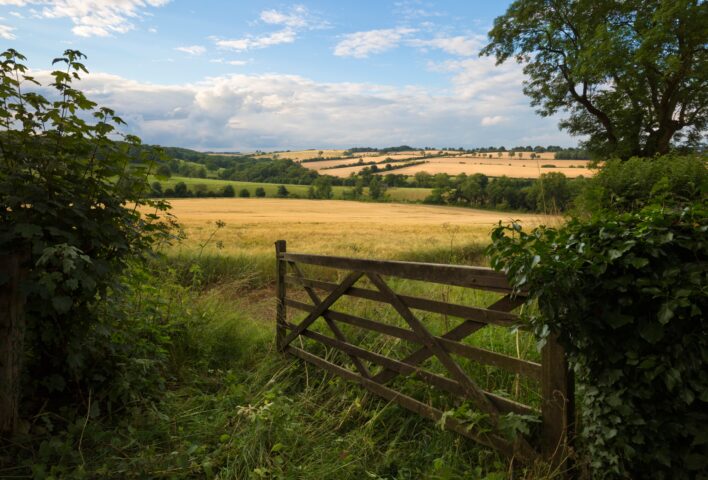
Farming animals for food is one of the most inefficient and unsustainable uses of land. The Government’s recently published Land Use Framework appears to present a key opportunity to transition away from specific types of animal farming and towards more sustainable land use practices.
The Land Use Framework aims to give farmers long-term clarity on land-use opportunities and policy, enabling more profitable, diversified farming that balances high-quality food production with nature recovery and climate resilience by 2030. By 2050, it envisions agricultural land being managed sustainably to deliver both food and environmental benefits, climate resilience, and long-term investment opportunities for farmers.
We welcome this ambitious vision. Farming animals for food is one of the most inefficient and unsustainable uses of land, and the Framework presents a key opportunity to transition toward more sustainable practices. In particular, we encourage supporting farmers to shift upland land currently used for farming sheep and lamb toward uses that better benefit nature, climate, and energy.
Sheep and lamb farming in the UK is in long-term decline, reflecting both economic pressures and changing diets. The national breeding ewe population has fallen to 14.7 million, the lowest in living memory, while the total flock stands at 30.4 million, numbers last seen when the UK population was much smaller. Consumption of meat from lambs and sheep has mirrored this decline, dropping from 128 g per person per week in 1980 to just 23 g today. Rising costs, reduced subsidies, and competition from imported meat have made traditional upland sheep farming increasingly marginal, highlighting both the challenges for farmers and the opportunity to repurpose land for sustainable, biodiversity-friendly uses.
A focus on the UK’s homegrown horticulture sector is also welcome. This is key to maintaining food security. If we are to eat an increasingly plant-rich diet, its critical we grow more of our own fruit and vegetables, particularly as we currently import a substantial amount of fruit and vegetables from southern Europe, where crop yields are under increasing threat from climate change.
Overall, The Vegetarian Society welcomes the Government’s focus on using land more sustainably, supporting transitions that benefit nature, climate, and energy. By combining smarter land management with dietary change, we can build a more sustainable future for people, animals, and the planet.

Lettuce Keep You in the Loop

We are a collective of determined people, connected by our shared belief in a better future for every life on earth. Keep up with our work and sign up to our newsletters...
Follow us on social