Vegetarian Society Response to the Defra Consultation on Mutilations in Lambs
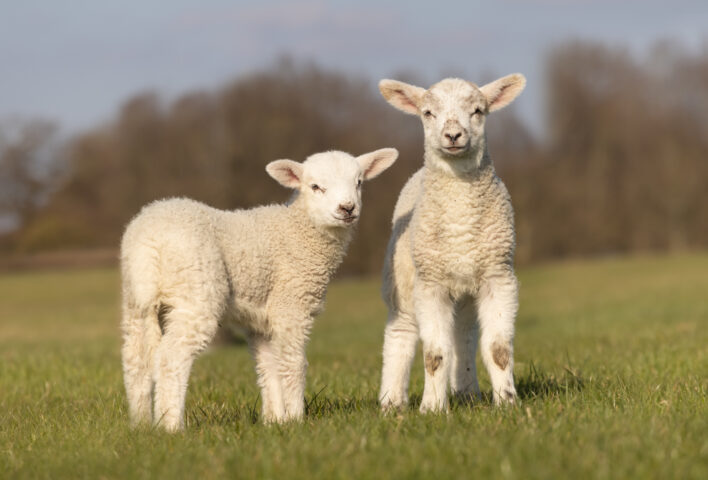
The Government has recently been asking for opinions on the practices of castration and tail docking on lambs. These are commonly carried out practices in farming – but we consider them to be largely cruel and unnecessary. Both of these practices cause signification harm, distress and injury to young animals that can last for a lengthy period of time after the event. Read our position on mutilations in lambs.
The Vegetarian Society Position on Mutilations in Lambs
1. What is the Vegetarian Society’s position on surgical castration of lambs?
Answer: The Vegetarian Society opposes routine surgical castration under any conditions. It should only be permitted if clinically necessary to treat an individual animal, carried out by a veterinary surgeon with proper anaesthesia and analgesia.
2. What is the position on surgical tail docking?
Answer: Routine tail docking is also opposed. The only exceptions should be for clinical necessity, performed by a veterinary surgeon with appropriate pain relief.
3. What about rubber ring castration or tail docking of lambs under 3 months?
Answer: These methods cause significant pain and prolonged suffering. The Vegetarian Society opposes them under any circumstances. Age limits or pain relief do not make these procedures acceptable.
4. What about clamp, combined, or clip methods for castration and tail docking?
Answer: All routine methods – including clamp (Burdizzo), combined clamp/ring, clip, or hot iron – are opposed. Even with anaesthesia or analgesia, these procedures cause acute pain, tissue trauma, and permanent loss of bodily integrity. They should only occur if clinically necessary and under veterinary supervision.
5. Does training or competence of a stockkeeper make these procedures acceptable?
Answer: No. While proper training may reduce the risk of mistakes, it does not eliminate the inherent suffering caused by these procedures. Only veterinary-performed procedures for clinical reasons are ethically acceptable.
6. Should castration or tail docking be performed in the first 24 hours of life?
Answer: No. The Vegetarian Society supports a minimum 24-hour threshold as a short-term safeguard, but this does not resolve the underlying welfare issue. Routine castration and tail docking should be prohibited.
7. Should older lambs (over 3 months) be castrated or tail docked?
Answer: No. Castration or tail docking in older lambs increases pain, haemorrhage risk, and healing time. Routine procedures for management, logistics, or market reasons cannot be justified.
8. Why is tail docking done? Does it prevent flystrike?
Answer: Tail docking is often done to reduce the risk of flystrike, to make handling easier, or for cosmetic/management reasons. Evidence shows that routine docking is not the only effective way to prevent flystrike. Alternatives include:
- Breeding sheep with cleaner tails or less wool around the breech
- Good pasture and grazing management
- Parasite control
- Regular monitoring and hygiene
The Vegetarian Society considers that routine docking for flystrike prevention is ethically unacceptable, especially when non-invasive measures are available.
9. What actions does the Vegetarian Society recommend for Government?
Answer:
- Prohibit routine mutilations.
- Allow only narrowly defined veterinary exceptions for genuine clinical need.
- Provide guidance stating that routine mutilations for convenience, cosmetic, or market reasons are unacceptable.
- Ensure enforcement, monitoring, and reporting.
- Support long-term transition toward alternative farming systems, including plant-based food production.
10. Will stopping castration cause overpopulation of lambs?
Answer: No. Most sheep are managed breeding flocks, and farmers control mating by separating rams and ewes. Population growth is already regulated through controlled breeding.
11. What is the Vegetarian Society seeking in the long term?
Answer: In the long term, the Vegetarian Society is seeking to abolish cruellest practices in the farming industry that cause extreme suffering to animals, including routine tail-docking and castration.
Routine castration and tail docking should be prohibited in legislation, with only narrowly defined veterinary exceptions permitted for genuine clinical need, carried out under appropriate anaesthesia and analgesia. We are calling for clear statutory guidance, robust enforcement, and transparent record-keeping to prevent routine use under the guise of management or market convenience.
More broadly, we advocate for structural change that reduces systemic reliance on invasive practices, including alternative husbandry approaches, lower stocking densities, and support for the transition toward more sustainable, plant-based food systems.
What can I do to help lambs?
You can help lambs and all animals by leaving them off your plate.
Every September, we hold Love Lambs Week, during which we encourage people to leave lamb meat off the plate, and provide inspiration for delicious vegetarian and plant-based alternatives.
Be sure to keep up to date on Love Lambs Week 2026 (1st – 7thSeptember), and other campaign news


Lettuce Keep You in the Loop

We are a collective of determined people, connected by our shared belief in a better future for every life on earth. Keep up with our work and sign up to our newsletters...
Follow us on social