Guide to Plant Milks
Whether you’re concerned about your health, animal welfare or the environment, there are many reasons you might want to switch from dairy and choose a plant milk instead. Choosing the right one for you is easier than ever with our handy guide to plant milks.
When you see a Vegetarian Society Approved certification mark on a product, you know that it meets your ethical standards – so, vegetarian, vegan or plant-based, these are products that you can trust!
Plant milks are nothing new. Often derided as a modern fad, in fact plant milks have been around for hundreds of years, all over the world. Medieval monks drank almond milk on fast days. The earliest recipe for soy milk goes back to possibly the 1st century AD. Polynesian peoples may have been drinking coconut milk for 5,000 years.
Why are plant milks so popular?
Plant milks are certainly going through something of a popularity boom. This is for a few reasons. They are suitable for vegetarians and vegans, meaning many places like cafes and schools / universities choose plant milks so everyone can drink them. They are also popular among people with lactose intolerance.
Where dairy based milks all tend to be similar in taste and profile, plant milks have a wide choice of flavours and uses. They also often have a lower environmental impact than dairy milk.
Meet the main plant milks
Which plant milk is right for you? Of course the first thing to mention is the taste. Only you can figure out which plant milk tastes best to you – so you’re going to have to try them out!
Oat milk
- Creamy texture.
- Popular in coffee.
- Widely produced in the UK.
- Often considered one of the most environmentally friendly options.
Soya milk
- One of the oldest and most nutritious alternatives.
- Typically higher in protein than other plant milks.
- Works well in cooking and baking.
Almond milk
- Light, mild flavour.
- Low in calories.
- Popular in smoothies and cereals.
Pea milk
- High in protein.
- An emerging alternative with a smaller environmental footprint than some options.
Coconut milk drink
- Naturally sweet.
- Distinct flavour.
- Best for certain cuisines and tropical-inspired drinks.
Which plant milk is best for…?
Not all plant milks are meant to be used in the same ways as each other.
- Tea & Coffee: Oat or barista-style soya.
- Protein: Soya or pea.
- Breakfast cereals: Oat, almond or soya.
- Baking: Soya and oat.
- Cooking: Soya, oat and coconut, depending on the dish.
Are plant milks fortified?
Plant milks don’t have the same nutritional profile as dairy milk but some offer close matches in terms of protein. For example, many plant milks are fortified with:
- Calcium
- Vitamin B12
- Vitamin D
- Iodine (in some cases)
Make sure to check labels to compare the nutritional benefits.
The environmental impacts of different plant milks [i]
One criticism made against plant milks is that they have an environmental cost. This is true of all foods – plant milk is no exception. However, different plant milks have different environmental impacts. Generally, plant milks require fewer resources than dairy milk.
Different milks have different average greenhouse gas emissions and average water uses associated with them.
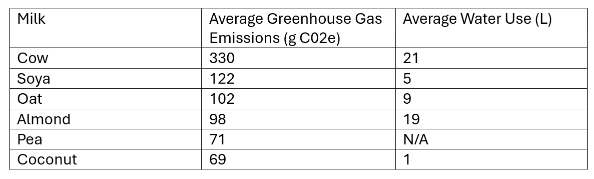
These figures show that plant milks on average generate a third of the greenhouse gases that dairy does – or less. They also use less water. Plant milks are overall a more sustainable choice than dairy for these reasons.
According to Our World in Data[ii],
‘Cow’s milk has significantly higher impacts than the plant-based alternatives across all metrics. It causes around three times as much greenhouse gas emissions; uses around ten times as much land; two to twenty times as much freshwater; and creates much higher levels of eutrophication.
If you want to reduce the environmental footprint of your diet, switching to plant-based alternatives is a good option.’
What’s the Best Plant Milk for You?
There is no single “best” plant milk. We all have different tastes and preferences – and different milks fulfil different roles better.
If your desire to avoid dairy milks is based on your health, then checking nutrition and fortification can help you choose the option that fits your lifestyle. For example, unsweetened plant milks are low in sugar.
Trying several types of milk is often the best way to find a favourite – so give a few a go and make sure to try them in your tea!
Some Vegetarian Society Approved Plant Milks
Giraf
MACADAMIA MILK RANGE
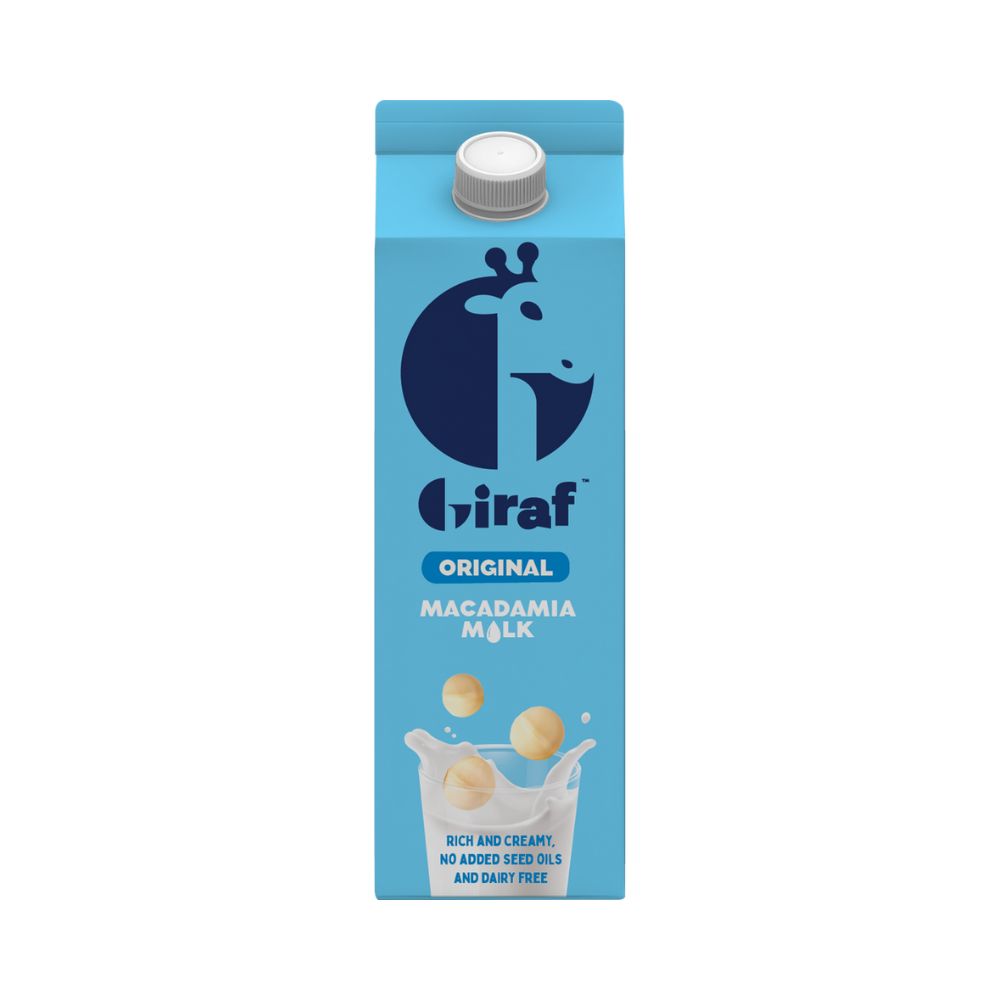
Made with sustainably sourced macadamia nuts
Giraf Macadamia sets a new standard in rich, creamy and sustainably sourced dairy-free alternatives. It is proudly produced by Ambermacs, a leading processor of premium macadamias from its own growers in Mpumalanga, South Africa.
Rude Health
Almond Drink
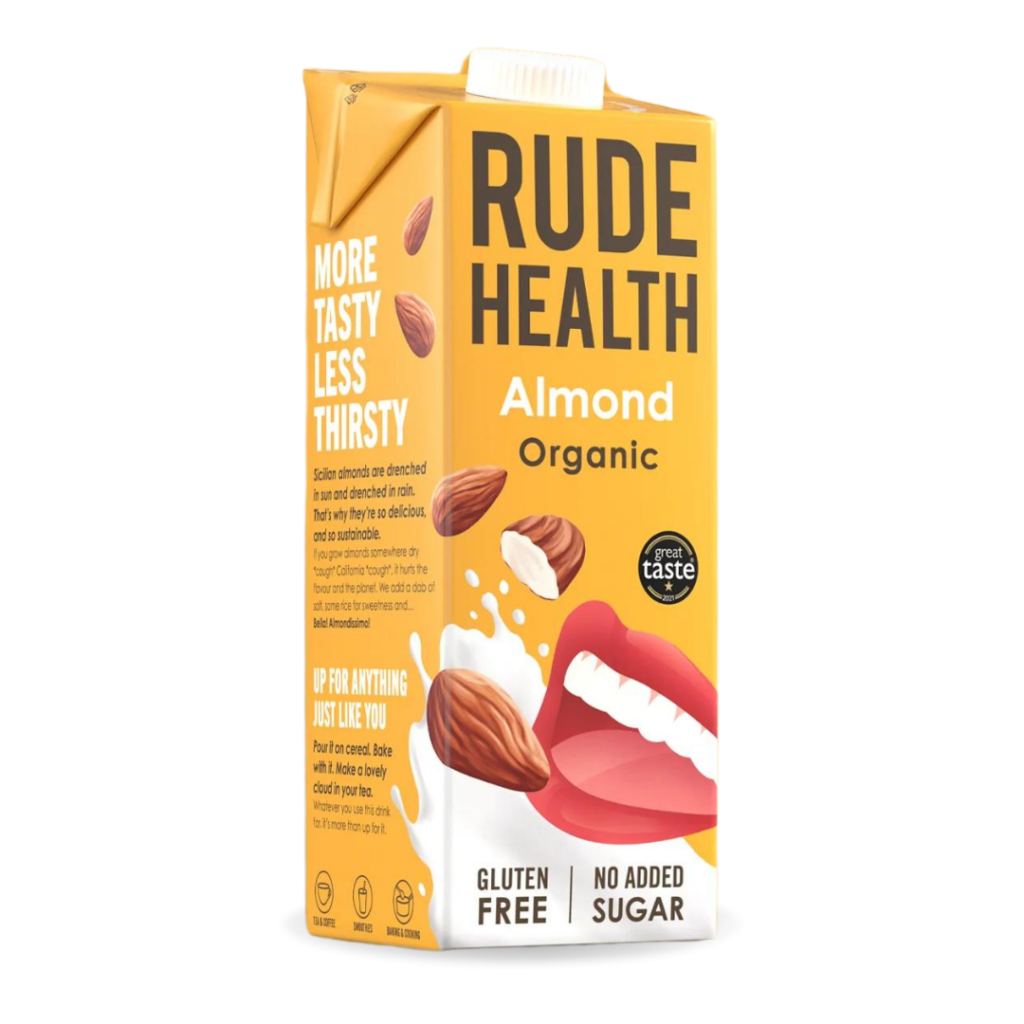
MORE TASTY LESS THIRSTY
Sicilian almonds are drenched in sun and drenched in rain. That’s why they’re so delicious, and so sustainable. Rude Health add a dab of salt, rice for sweetness and…Bella! Almondissimo!
WHAT DOES IT TASTE LIKE?
A creamy drink with a subtly sweet nutty almond flavour.
HOW SHOULD I USE IT?
Whatever you use this drink for, it’s more than up for it.
Grow with Iris
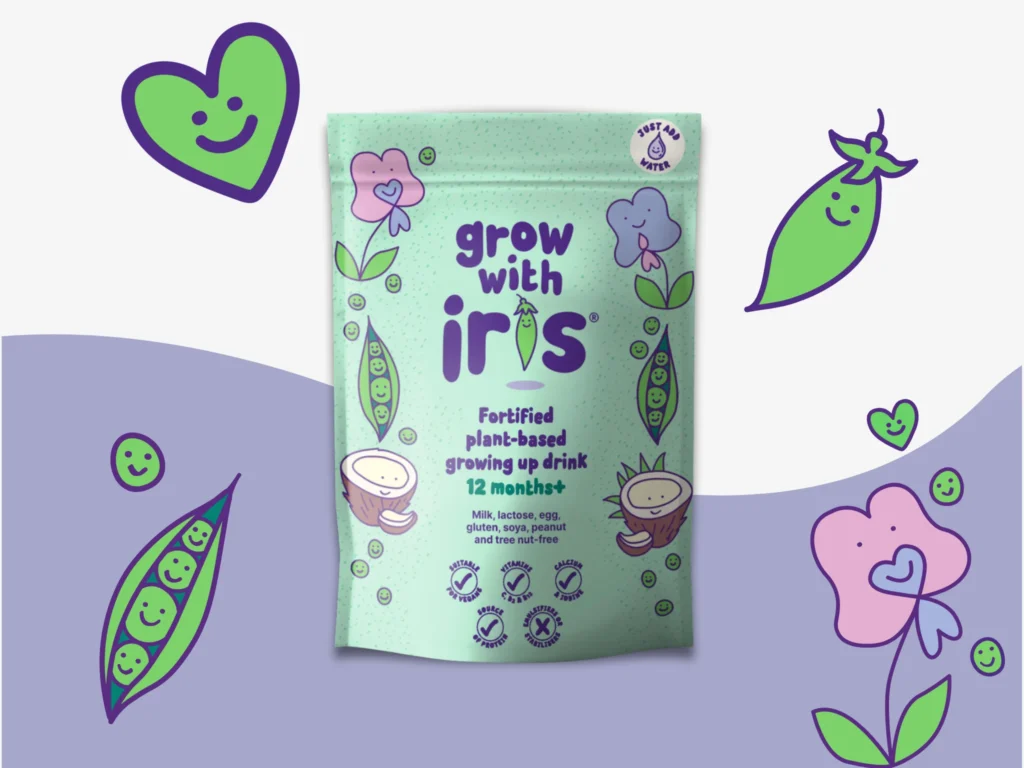
Fortified milk alternative, nutritionally tailored for toddlers. Packed with essential vitamins & minerals, our plant-based growing up drink is made with experts to support more little ones to grow and thrive.
Specially suitable for young children where an alternative to cow’s milk or soya based drink is advised.
[i] https://ourworldindata.org/environmental-impact-milks
[i] https://www.wri.org/insights/milks-environmental-impact
Lettuce Keep You in the Loop

We are a collective of determined people, connected by our shared belief in a better future for every life on earth. Keep up with our work and sign up to our newsletters...
Follow us on social