‘No more excuses’ – new research shows alternatives to male chick culling in raptor feed
PRESS RELEASE
For immediate release
A new report commissioned by the Vegetarian Society has, for the first time, set out clear and practical alternatives to using culled male chicks as feed for captive raptors and reptiles – removing a key barrier to ending male chick culling in the UK.
The report comes shortly after the launch of a new roadmap laying out the next steps for Government to end male chick culling, developed as part of the Vegetarian Society’s ongoing ‘Ban Hatch & Dispatch’ campaign, to bring male chick culling to an end.
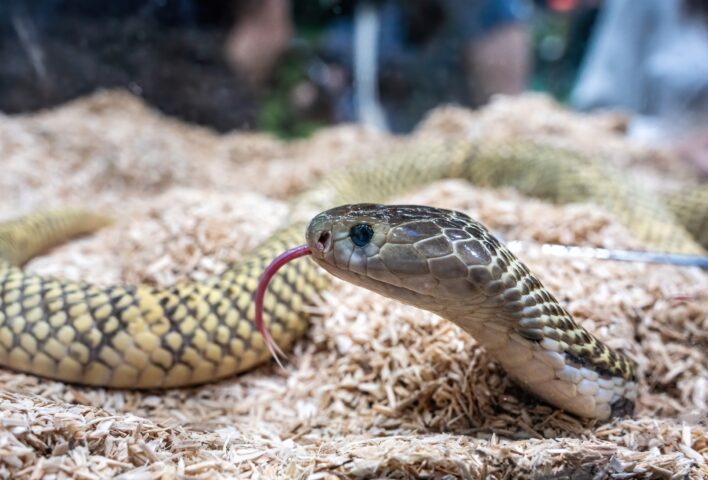
Each year in the UK, an estimated 45 million male chicks are killed shortly after hatching because they are viewed as waste by the egg industry. An estimated 70% of these chicks are then used as feed for captive raptors and reptiles, creating a structural dependency that has long been cited as a barrier to reform.
The new research identifies multiple viable pathways forward, including the use of whole-as-possible animal by-products (ABPs) from slaughterhouses, as well as longer-term innovation in cultivated or engineered whole-prey systems.
The findings challenge the assumption that male chick culling must continue to supply feed for captive carnivores, demonstrating that practical and scalable alternatives already exist. As more countries switch to in-ovo sexing technology, the supply of culled chicks is expected to decline, making research into viable alternatives increasingly urgent.
First-of-its-kind analysis
The report, Sustainable Alternatives to Culled Chicks as Captive Raptor and Reptile Feed (2026), authored by Jenny L. Mace, animal welfare researcher and Visiting Scholar at the University of St Andrews, is the in-depth consideration of viable alternatives to feeding culled chicks to captive carnivorous animals.
The report concludes that alternatives such as whole-as-possible animal by-products (ABPs) from slaughterhouses can meet the nutritional and behavioural needs of captive raptors and reptiles without reliance on day-old chicks. It further recommends using this research as a baseline for government-led work to assess and develop viable alternative sources of raptor feed and to support a structured transition away from dependence on culled chicks and calls for a transition timeline as a critical next step.
Jenny L. Mace said:
“Given what we know about human nature and human behaviour change, I can only imagine that having a legislative deadline will help massively with implementing and adjusting to alternative sources of whole feed for captive raptors and other exotics, including alternative options that will minimise the killing of additional animals.
It’s quite amazing how many pre-existing animal carcasses or parts thereof are already created in society – be it carcasses generated from the culling of ‘pest’ species, surplus non-GMO lab animals, or unwanted (yet still quite ‘whole’) by-products from slaughterhouses and hatcheries. These can be applied to this very meaningful use, whilst we await more technological solutions in the much longer term.”
Expert and sector perspectives
The report brings together perspectives from animal welfare science and industry stakeholders, highlighting both feasibility and the need for structured transition planning.
Experts and sector stakeholders involved in raptor nutrition, veterinary medicine, and zoological management indicate growing interest in exploring practical alternatives to the current reliance on culled male chicks as whole-prey feed. Rather than continuing with a system dependent on a single, ethically contested supply chain, they highlight the feasibility of trialling alternative sources such as animal by-products (ABPs) and hatchery or slaughterhouse outputs.
Neil Forbes, BVetMed DECZM FRCVS, RCVS Recognised Specialist Zoo Animal and Wildlife Medicine (avian), European Veterinary Specialist Zoological Medicine (avian), Cert C&G Zoo Inspection, said:
“Quality assurance tests should commence regarding the most common animals (or parts thereof) that may be available as alternative whole feed for birds of prey to culled chicks. This will refine our understanding of the nutritional profile of alternative whole feeds and safeguard raptor health and welfare.”
A senior management representative at the British and Irish Association of Zoos & Aquaria (BIAZA) said:
“We are open to a mini trial of using whole-as-possible ABPs amongst some of our members. Primary issues for BIAZA are welfare, nutritional quality and comparability, biosecurity, affordability, and logistical feasibility.”
Removing a key barrier to ending chick culling
The Vegetarian Society’s Ban Hatch & Dispatch campaign was launched in April 2025, and ending male chick culling was subsequently included in the Government’s Animal Welfare Strategy, published in December 2025.5
Public opposition to male chick culling remains high, with over 40,000 signatures on the public petition and sustained parliamentary and celebrity support. Recently, a new roadmap was launched to support the Government in delivering this commitment, signed by 19 MPs and Peers and supported by Dame Joanna Lumley.
Several countries, including Germany, France, Austria, Switzerland, and most recently Norway, have introduced bans on male chick culling or are in the process of transitioning away from the practice.
Jenny Canham, Public Affairs Lead at the Vegetarian Society, said:
“With this report and roadmap, the Government can no longer claim it lacks a way forward. There is no credible justification for further delay in ending male chick culling. Every year of inaction means tens of millions more baby animals are subjected to entirely avoidable suffering. The public is clear: they want an end to this practice. No more excuses.”
END
Notes to editors:
- For all press enquiries, please contact press@vegsoc.org
- The report was commissioned by the Vegetarian Society and is available here
- The Ban Hatch & Dispatch petition is available here


Lettuce Keep You in the Loop

We are a collective of determined people, connected by our shared belief in a better future for every life on earth. Keep up with our work and sign up to our newsletters...
Follow us on social