Sustainable Catering: How Plant-Based Menus Reduce Environmental Impact
Sustainability is now a core priority across the catering sector, driven by procurement requirements, net zero commitments and increasing scrutiny on environmental impact.
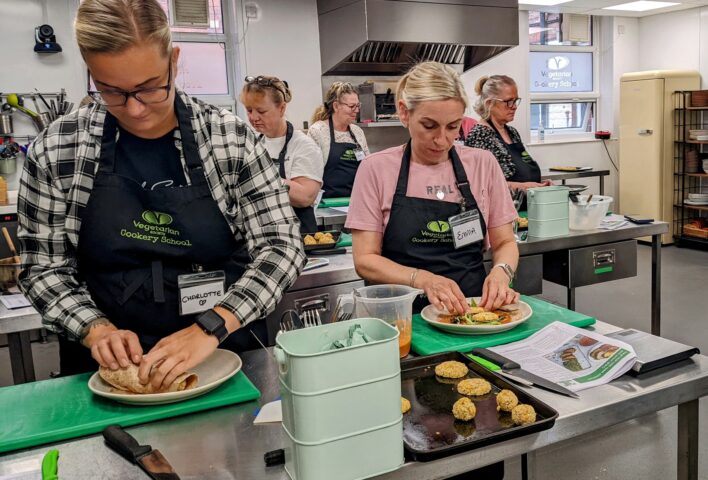
For catering teams in schools, healthcare and hospitality, food is one of the most powerful levers for change.
Evidence from organisations including the Intergovernmental Panel on Climate Change and World Resources Institute shows that shifting towards plant-based meals is one of the most effective ways to reduce emissions within food systems.
At the Vegetarian Society Cookery School, we help catering teams translate these goals into practical, scalable menu changes.
Why Food Matters in Sustainable Catering
The global food system is responsible for approximately 26–34% of total greenhouse gas emissions, according to the Intergovernmental Panel on Climate Change.
Crucially, not all foods contribute equally.
Data compiled by Our World in Data shows that:
- Beef can produce over 60 kg CO₂e per kg of food
- Lamb also has a high emissions intensity
- In contrast, plant-based foods such as lentils produce under 1 kg CO₂e per kg
This means ingredient choice alone can dramatically change the footprint of a menu. For catering teams, sustainability isn’t abstract, it’s built into every dish served.
How Plant-Based Catering Supports Net Zero Targets
Public sector organisations, including healthcare providers and local authorities, are increasingly working towards net zero targets.
The World Resources Institute identifies dietary shifts towards plant-based foods as a key strategy for reducing emissions at scale.
For catering teams, this translates into:
- Lower emissions per meal
- Alignment with sustainability frameworks
- Contribution to organisational reporting and targets
Importantly, this doesn’t require removing all animal products overnight. Incremental changes, such as:
- Increasing plant-based menu options
- Reformulating high-impact dishes
- Reducing reliance on red meat
can deliver measurable progress.
ready to review your menu?
If you’re looking to better meet demand and improve the performance of your plant-based offer, we can help.
Reducing the Carbon Footprint of Your Catering Menu
Sustainable catering starts with practical, achievable changes.
Focus on high-impact swaps
The biggest gains come from targeting the most carbon-intensive ingredients.
- Reduce beef and lamb where possible
- Introduce pulses, beans and grains
- Use plant-based alternatives strategically
Research from Our World in Data shows that these swaps can significantly lower emissions per meal.
Design menus holistically
Sustainability must work alongside:
- Nutrition
- Cost
- Operational feasibility
Menus that are too complex or impractical will fail, regardless of their environmental credentials.
Reduce food waste
Food waste contributes significantly to emissions across the supply chain.
The World Resources Institute highlights reducing food loss and waste as a critical climate action.
In catering, this means:
- Monitoring uptake
- Adjusting portion sizes
- Designing menus with overlapping ingredients
This is both a sustainability and cost-saving opportunity.
Sustainable Catering in Schools and Healthcare
Different sectors require tailored approaches.
Schools
Opportunities:
- Introduce plant-based meals early
- Normalise lower-impact food choices
- Align with education and sustainability goals
Challenges:
- Budget constraints
- Student preferences
- Familiarity of dishes
Healthcare
Healthcare catering must balance:
- Nutritional requirements
- Patient needs
- Operational consistency
Sustainability is increasingly linked to broader system goals, including those aligned with NHS England net zero ambitions.
Plant-based menu development can support both environmental and health outcomes when implemented carefully.
What Does Sustainable Catering Actually Mean?
Sustainable catering is not a single initiative, it’s an approach. It includes:
- Lower-impact menu design
- Efficient use of ingredients
- Reduced waste
- Alignment with organisational targets
Plant-based catering is one of the most effective and accessible ways to make progress, but it must be implemented in a way that works operationally.
Turn Sustainability into Practical Action
Understanding the theory is one thing but delivering it in a busy catering environment is another. Our catering training helps teams:
- Translate sustainability goals into real menus
- Develop plant-based dishes that perform in practice
- Balance cost, nutrition and environmental impact
- Deliver change that works at scale
FAQs
What is sustainable catering?
Sustainable catering involves designing and delivering food services in a way that reduces environmental impact, including lower emissions, reduced waste and responsible sourcing.
Why are plant-based meals more sustainable?
Plant-based foods generally require fewer resources and produce fewer greenhouse gas emissions than animal-based foods, particularly red meat, according to the Our World in Data.
How can catering teams reduce their carbon footprint?
By reducing high-impact ingredients, increasing plant-based options, minimising waste and designing efficient menus.
What are the first steps towards more sustainable catering?
Small changes to menu design, ingredient choices and kitchen practices can all help reduce the environmental impact of catering.
To help teams get started, we’ve created a practical Sustainable Catering Starter Checklist covering achievable actions for real catering environments.
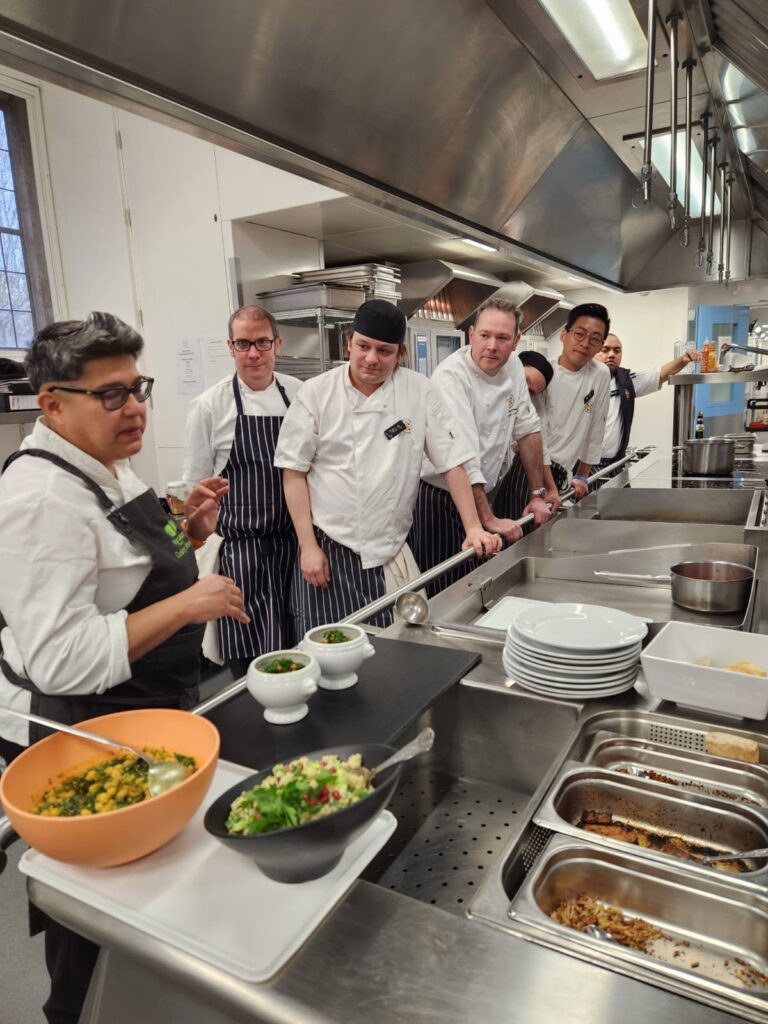
Ready to Develop Your Plant-Based Menu?
Building a successful plant-based menu takes more than good ideas, it requires the right structure, skills and confidence to deliver consistently in real kitchens. Our catering training programmes help teams turn these principles into practical, scalable menus that work day after day.

Meeting Demand for Plant-Based Food in Catering
Consumer expectations around food are changing. Across schools, healthcare and hospitality, more people are actively choosing to reduce meat consumption and expect to see plant-based options available.

Plant-Based Menu Development for Catering Teams
Creating a successful plant-based menu in catering isn’t about removing meat or following trends. It’s about building dishes that work in real kitchens, day after day.
Lettuce Keep You in the Loop

We are a collective of determined people, connected by our shared belief in a better future for every life on earth. Keep up with our work and sign up to our newsletters...
Follow us on social