Alternative Grains – How to Make the Most of Them
Freshen up your regular meals by using alternative grains – learn how to use quinoa and polenta with the Vegetarian Society.
The Vegetarian Society Guide to Quinoa
What is Quinoa?
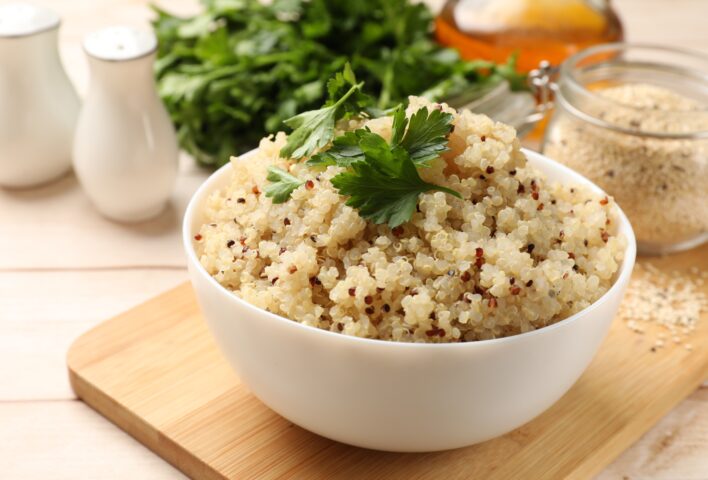
Quinoa (pronounced KEEN-wah) is the seed of the quinoa plant. It’s usually cooked and eaten like you would do with grains. People around the world have been eating quinoa for around 7,000 years!
Quinoa is a complete protein making it a perfect addition to veggie and vegan plates. It’s also gluten-free so it’s a great option for coeliacs or if you’re gluten intolerant.
What does quinoa taste like?
Quinoa has a mild, nutty, slightly sweet, and mildly earthy flavour. It is similar in taste and texture to bulgur wheat. It’s fluffy with a slight crunch when cooked.
How to buy quinoa
Look for quinoa with pulses and grains in most supermarkets. Although white is the most popular colour, red and black varieties are also available. It will usually be in bags or boxes.
How to use it
The perfect quinoa
- 1 part quinoa, 3 parts cold water. So, for 100g quinoa
use 300ml of water. - Add a pinch of salt and stir well. (Add vegetable stock
powder for extra flavour here.) - You need a very tight-fitting pan lid. If you don’t have
one, wrap the lid in a tea towel before popping on the
pan. - Bring to the boil on a medium heat.
- Reduce the heat to a simmer and cook without
removing the lid for 10-15 minutes until the water is
absorbed. You should be able to see the little white
‘sprout’ uncurl slightly in each grain when cooked. - Leave the lid on and leave to steam and rest for
5 minutes. - Fluff up with a fork before serving.
(Note: check the packaging to see if you need to wash
the quinoa before cooking.)
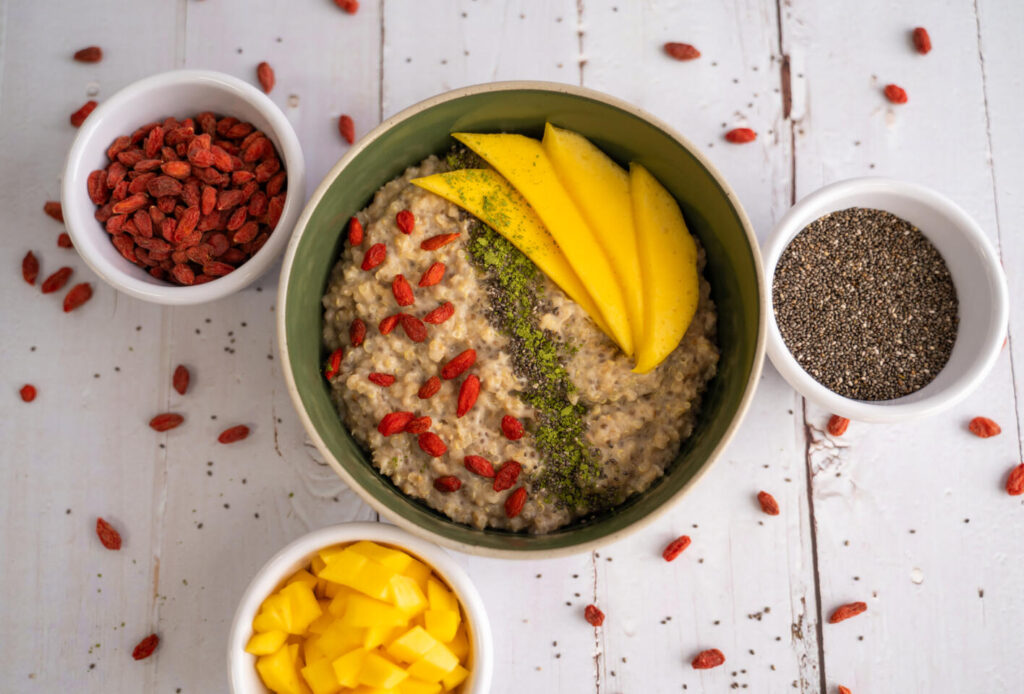
Quinoa and Chia Seed Porridge
The Vegetarian Society Guide to Polenta
What is Polenta?
Polenta is a northern Italian dish made of coarsely ground corn. This ground corn is boiled to make polenta. When hot and freshly cooked, it looks
a little like soft, creamy, yellow porridge. As it cools, it firms up and then can be sliced, fried or layered like pasta sheets. It’s a great gluten-free option in Italian dishes.
What does polenta taste like?
Polenta has a mild and sweet corn flavour and a soft texture.
How to buy polenta
You’ll find polenta cornmeal with dried goods like pasta in supermarkets. It’s often in boxes or bags. You can use generic medium or coarsely ground cornmeal too.
How to use it
Here’s how to make great tasting polenta without any fuss.
Flavour the polenta with your favourite seasonings while soft. Fresh herbs, spices, vegetarian pesto, are all tasty additions.
Always follow the packet guidelines. Too much or too little liquid will give you sloppy or hard polenta.
Stir the polenta vigorously during cooking, it will prevent it forming clumps.
Use vegetarian stock or bouillon instead of water. This instantly gives the polenta more flavour.
Use half and half water and dairy or oat milk when preparing for an extra creamy soft polenta.
Add a generous knob of dairy or vegan butter while the polenta is still soft and warm for a bit of luxury.
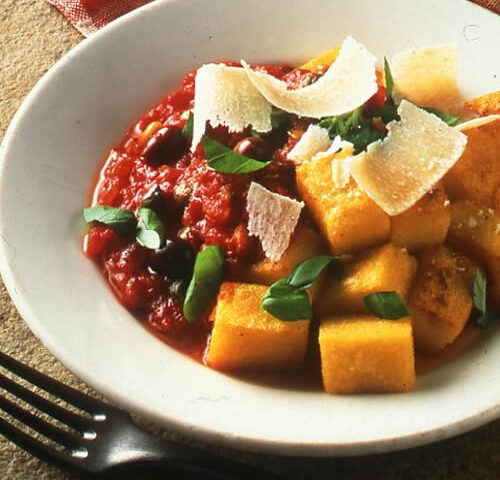
Polenta with Sicilian Tomato Sauce
You can take a look at our vast range of recipes, including ideas for using all sorts of alternative grains in our recipe collection, linked below.



Lettuce Keep You in the Loop

We are a collective of determined people, connected by our shared belief in a better future for every life on earth. Keep up with our work and sign up to our newsletters...
Follow us on social