Plant-Based Menu Development for Catering Teams
Creating a successful plant-based menu in catering isn’t about removing meat or following trends. It’s about building dishes that work in real kitchens, day after day.
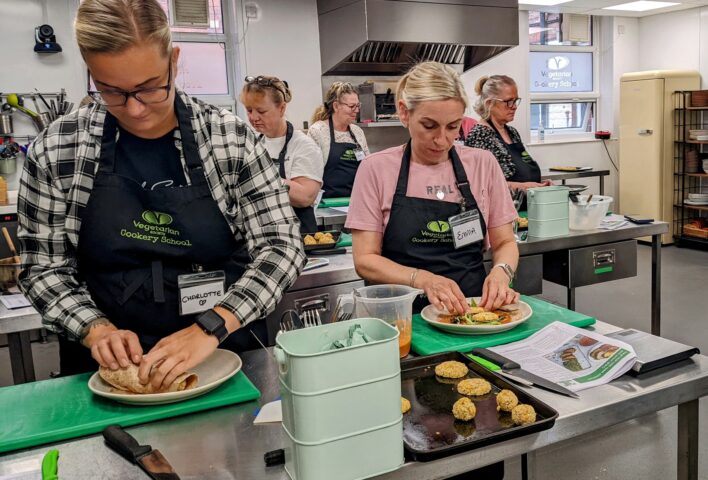
This guide to plant-based menu development for catering teams shares the principles we use in our training to help schools, healthcare providers and hospitality businesses design menus that are practical, scalable and commercially viable.
At COOK! with the Vegetarian Society, menu development is not treated as a standalone task. It brings together nutrition, ingredient knowledge, culinary technique, operational realities, and customer expectations. Our training is designed to help caterers build this joined-up understanding, so plant-based dishes and menus are not only appealing, but reliable, scalable, and well received.
We support caterers across education, healthcare and hospitality who want their vegetarian and vegan dishes to perform in the real world. What we see time and again is that the difference between success and disappointment comes down to how dishes and menus are designed, not just what ingredients are used.
Rather than offering one-size-fits-all solutions, we equip catering teams with the skills and knowledge to make informed decisions about what will work in their kitchens, with their teams and their customers.
From Ideas to Workable Menus in Plant-Based Catering
One of the biggest challenges in plant-based catering is moving from an idea that sounds good in theory to a dish that performs consistently in practice.
In real catering environments, plant-based menus must deliver against multiple priorities:
- Customer satisfaction
- Cost control and waste reduction
- Staffing levels and skill mix
- Equipment and service constraints
- Nutrition and balance
Our training supports caterers to understand how these factors interact, and how vegetarian and vegan menu development decisions impact the success of a dish long after it has been written on a menu.
Rather than simply cooking dishes without meat, teams learn how plant-based dishes are structured differently, and how to design meals that feel complete, satisfying, and intentional, and that work perfectly in their kitchens.
From our experience, successful plant‑based menus share some common foundations.
For teams looking to take this further, our plant-based catering training helps turn these principles into practical, scalable menus.
Understanding Structure and Balance in Plant-Based Menu Development
One of the most common starting points for plant-based menu development is also one of the least effective: taking an existing meat-based dish and trying to re-design it without the meat.
This approach often leads to meals that feel incomplete, unbalanced, or unsatisfying. Removing an ingredient is rarely enough, especially when that ingredient was doing a lot of the heavy lifting in terms of protein and texture.
Instead, strong plant-based dishes are designed from the ground up, with a clear internal logic. In practice, this means thinking about:
- A protein backbone (lentils, beans, tofu, tempeh)
- A carbohydrate base (grains, potatoes, pasta)
- Vegetables for flavour and texture
- Fats, seasoning and sauces to bring the dish together
When dishes have a clear structure, they are easier for teams to understand, reproduce and adapt and they tend to perform better with customers too.
This way of thinking is a shift for many kitchens, which is why it’s a core focus of our practical training sessions.
ready to review your menu?
If you’re looking to better meet demand and improve the performance of your plant-based offer, we can help.
Design Plant-Based Menus for Satisfaction, Not Just Presentation
A visually appealing dish that doesn’t leave people feeling satisfied is unlikely to succeed in a catering environment. Regardless of values or intentions, customers judge meals at every stage of the journey: how it is described on a menu, how it looks, the eating experience and on how it makes them feel afterwards.
In settings such as schools, hospitals, universities, and workplace catering, creating dishes that keep people feeling full and satisfied is not optional. If plant-based meals are perceived as light, insubstantial or not filling, uptake drops quickly and confidence in the menu, and the caterer, can be lost.
Successful plant-based menus consistently: use a structured approach to design dishes that keep people satisfied for longer. Use protein heavy ingredients (tofu, pulses, tempeh) do the heavy lifting here. Many plant-based and vegetarian dishes on real world menus are missing this incredibly important component.
Understanding how to achieve this balance for your audiences is a key skill we help teams develop.
Designing Plant-Based Menus for Real Kitchens and Real Teams
A menu that looks excellent on paper can still underperform if it doesn’t match the reality of the kitchen expected to produce it. A dish that requires precision finishing, time consuming techniques or last-minute assembly may work in a demonstration but struggle in a busy service.
In our workshops, caterers are encouraged to reflect on questions such as:
- How will this dish be produced at scale?
- How well will it hold during service?
- Can different team members produce it consistently?
- Is it realistic given our equipment, staffing, and time pressures?
- Is it within our budget?
By connecting menu planning directly to kitchen operations, teams begin to design dishes that work with their systems, rather than against them. This is particularly important in settings such as education and healthcare, where consistency and reliability are critical.
Building Confidence in Plant-Based Catering Skills
One of the most important outcomes of effective menu development is confidence. In practice, menus are more resilient and successful when chefs feel able to make informed decisions rather than relying on fixed recipes or prescriptive menus. Given the right grounding, many chefs thrive when they have scope for creativity. They just need the skills and knowledge in plant-based foods to help them create.
Most caterers already hold a wealth of transferable skills from other areas of food preparation. These skills don’t disappear when cooking plant‑based, but they can feel harder to apply without familiarity with ingredients, textures and formats that behave differently from meat‑based dishes.
Building confidence in plant‑based cooking is less about memorising new recipes, and more about developing the knowledge and judgement that allow teams to adapt, assess, and refine dishes with assurance. When that confidence is shared across a team, plant‑based menus become easier to maintain, develop, and scale over time.
Investing in team skills is a critical part of making plant‑based catering sustainable in the long term. It supports consistency, reduces reliance on individuals, and enables menus to evolve without losing quality or reliability.
Where Plant-Based Menus Often Go Wrong (and Why)
Most catering teams approach plant‑based menu development with positive intent. When menus fall short, it’s rarely due to lack of effort or commitment, it’s because certain challenges are consistently underestimated.
Across the catering teams we work with, the same patterns appear again and again. Understanding where plant‑based menus tend to struggle is an important step towards building ones that succeed.
Common Plant-Based Menu Development Mistakes (and Their Impact)
Even well-intentioned plant‑based menus can struggle if certain patterns aren’t recognised early.
These are some of the most common plant-based menu development challenges we encounter when working with catering teams across education, healthcare, and hospitality.
Challenges
Plant based main meals feel lighter than others
What it looks like in practice
Vegetable‑led dishes or pasta‑based mains with little substance
The impact
Customers try the option once, then avoid it; plant‑based meals gain a reputation for not being filling
Menus rely heavily on familiar carbohydrates
What it looks like in practice
Rice, pasta, or potatoes form the bulk of the plate
The impact
Meals lack balance and interest; customers don’t order it again; plant-based dishes appear dull
Creativity outweighs practicality
What it looks like in practice
Dishes that are complex, multi‑component or time‑sensitive
The impact
Inconsistent execution, added pressure during service, and uneven quality, unpopular with teams
Plant based options are added late in the process
What it looks like in practice
One or two vegan dishes included as an afterthought
The impact
Lower standards, reduced confidence from staff, and poor uptake
Menus are designed without service realities in mind
What it looks like in practice
Recipes that don’t batch cook or hold well
The impact
Quality drops during service, particularly in large‑scale environments
Knowledge sits with one or two people
What it looks like in practice
A small number of staff hold plant‑based expertise
The impact
Inconsistency across shifts or sites; progress stalls when those staff aren’t present
Customer expectations are misjudged
What it looks like in practice
Dishes don’t align with what people recognise or want to eat
The impact
Low acceptance, food waste, and frustration on both sides of the counter
Cost assumptions drive decisions
What it looks like in practice
Avoiding certain ingredients without considering the whole dish
The impact
False economies, repetitive menus, and missed opportunities
Why these patterns matter
On their own, none of these issues signal failure. But together, they can quietly undermine confidence in plant‑based menus among kitchen teams, managers, and customers alike. This leads to a drop in uptake and a reluctance to create more plant-based dishes.
What they all point to is the same underlying challenge:
plant‑based menu development requires a joined‑up set of skills, rather than isolated decisions or one‑off recipes.
How this connects to our training
Our catering training programmes are designed to help teams:
- Recognise these patterns early
- Build shared understanding across the kitchen
- Develop confidence in planning, adapting, and delivering plant‑based menus consistently
This is what allows plant‑based dishes to move to a reliable, well‑received part of everyday catering.
Plant-based menu development is not about one-off changes, it’s about building the skills and confidence to deliver consistently.
Our catering training programmes help teams apply these principles in their own kitchens, with their own constraints, so plant-based menus become a reliable and successful part of everyday catering.
Download Our Plant-Based Menu Development Guide
Creating successful plant-based menus requires more than simply adding vegan options. This practical guide shares the key principles we use in our catering training programmes to help teams develop menus that work in real kitchen environments.
* Structuring balanced plant-based dishes
* Common menu development mistakes
* Designing meals for customer uptake
* Scaling dishes for catering environments
* Practical considerations for kitchen teams
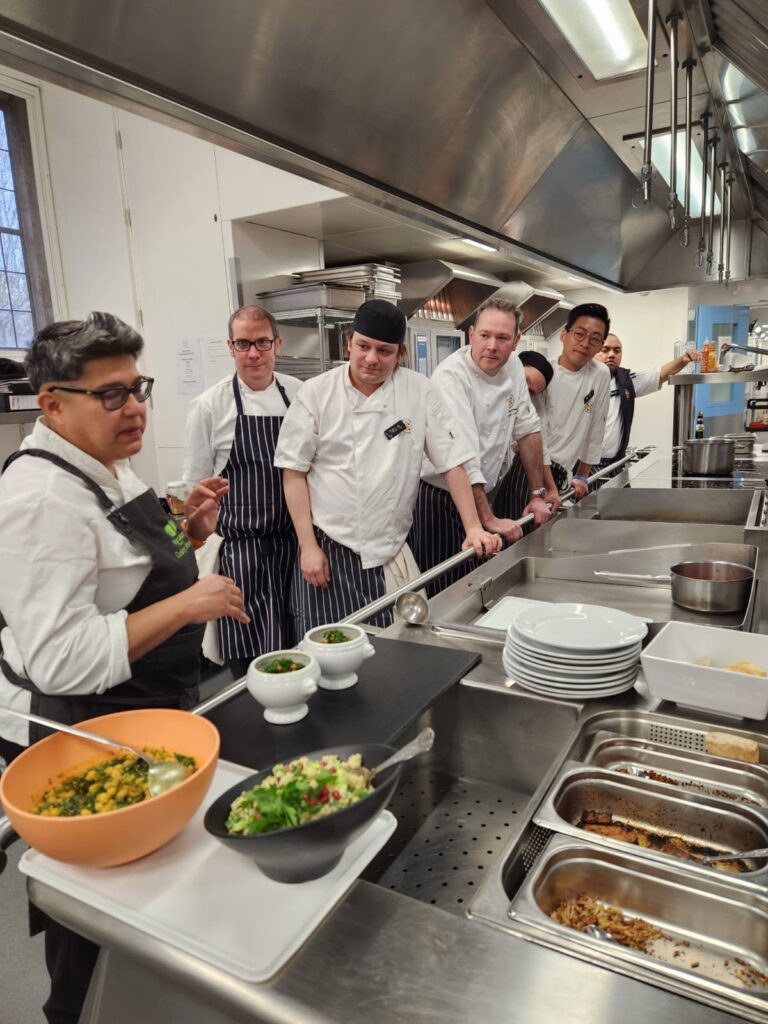
Ready to Develop Your Plant-Based Menu?
Building a successful plant-based menu takes more than good ideas, it requires the right structure, skills and confidence to deliver consistently in real kitchens. Our catering training programmes help teams turn these principles into practical, scalable menus that work day after day.
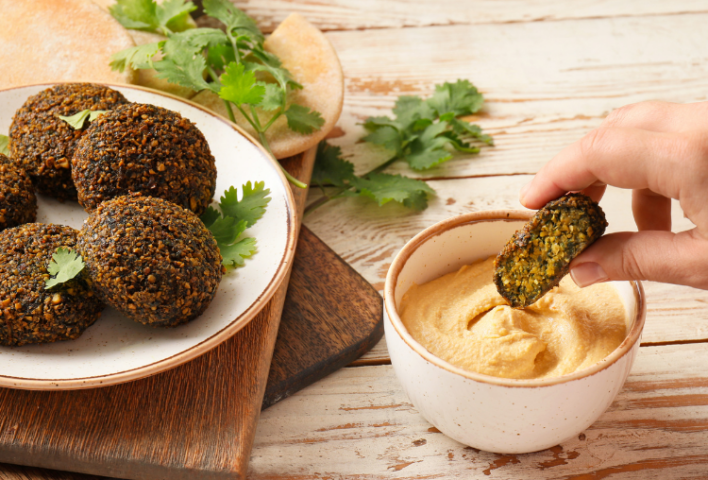
Meeting Demand for Plant-Based Food in Catering
Consumer expectations around food are changing. Across schools, healthcare and hospitality, more people are actively choosing to reduce meat consumption and expect to see plant-based options available.

How Plant-Based Menus Reduce Environmental Impact
For catering teams in schools, healthcare and hospitality, food is one of the most powerful levers for change.
Lettuce Keep You in the Loop

We are a collective of determined people, connected by our shared belief in a better future for every life on earth. Keep up with our work and sign up to our newsletters...
Follow us on social